
NJ and PA service area
Land clearing for sites, homes, and farms
Clearing opens a property for a building, a lane, or usable ground, and it is done with the permits and the layout in mind.
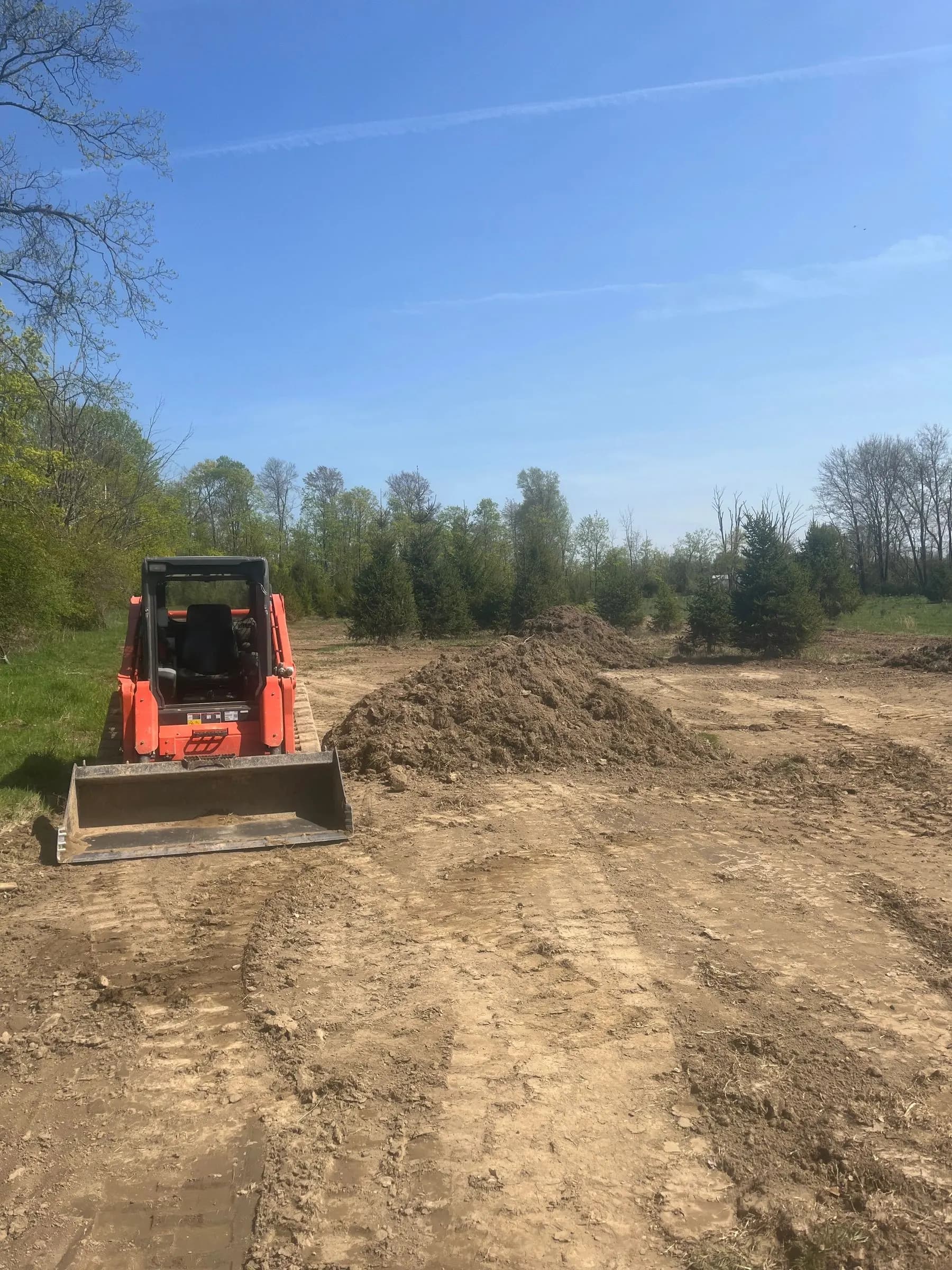
What gets cleared
Brush, saplings, and trees that are in the building area, the driveway, or the working yard. Stumps that would leave a void under a pad or a lane. Fallen timber that is blocking a fence line or a future structure. The result should be a site you can stake, not a half-cleared tangle with stumps left in the pad.
The company’s own description of this work is straightforward: opening a property, or clearing for a new building or home, on sites large enough to need a real crew, with an eye on how New Jersey and Pennsylvania land rules affect the job. Wetlands, stream buffers, and local tree ordinances can change what is allowed to come down. If an engineer or a surveyor has flagged a limit of disturbance, the clearing stays inside it.
Clearing is the start of site work
On a commercial lot, clearing is the first mobilization of a longer site: strip, grade, trench, and pad. On a residential acreage lot, clearing is often paired with the driveway and the house location so the crew is not returning to recut the same path. On a farm, clearing might be a building site or the edge of a field that has grown in.
Debris can be hauled. Material that stays on site is only left if it has a use, such as a clean wood chip or a topsoil stockpile that the owner asked to keep. Tell the crew which of those you want before the machines arrive.